News of the Nettle, A little bird brought me,
A message given to her whilst flying free,
Of how this year, if you get pierced –
you will feel a sting oh so fierce!
Urere! Urere!…..To burn! To burn!
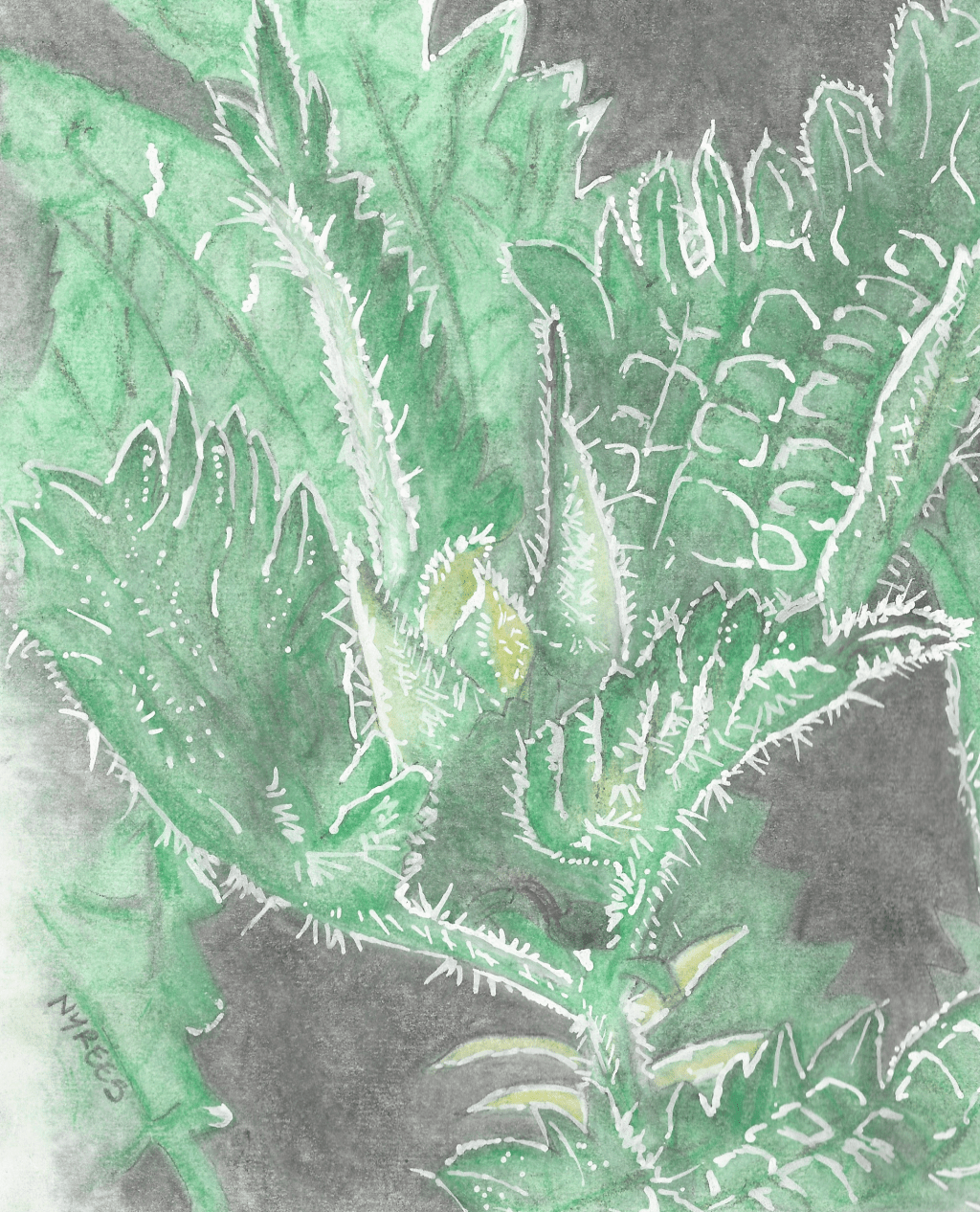
Bringer of the flame – A wisdom we call Nettlology,
A pioneer plant, which cannot be tamed.

A guardian of the threshold – transporter of the breath.
She is ready now for war – she is ready to protect,
Some say she is evasive, or is she screaming to be heard?
A NETTLE EPOCH!
Hear me cry!
Take heed of every word.

There exists, such a symbiosis, with this our ancient mother,
Called living fossil, called famine food,
A plant unlike any other.
Protector of beast and bird, creator of soil,
A harvest you can gather, without the need to toil.

Queen of transmutation, A guide to us through change,
A guide to us through change,
Resilient and adaptable, evolved down through an age.
Brings antidote to the sickly sweet, A mothers milk for pain,
To nourish and to strengthen, food directly to your brain.

Teaches about boundaries, stokes internal foundries
– Assists synapse interchange,
She is energized to act, when things around get tough,
Nettle is the one nature calls on, when she has had enough,
For she is destined to make a stand, to heal the ravages wrought on the land,
She holds the power against the foe, whom through the land does roave,
Her roots run deep and she brings flow, If you meet her you will know!

After initiation – Nettle offers ALL she has, she has the empathy to feel,
How we too are Nettled, don’t know what’s real.
Tantalizingly veiled, her wisdom – not all has been revealed,
If the world makes you feel weary, let her be your shield.
Connect with this powerful ally, who holds the power of light and dark,
You may think it strange, but at close range, she will lay bare her spark.

To sting as the Nettle does, two houses now united,
Chose unity, evolve, be free, your passions now ignited,
When taking counsel with the Nettle, show caution, give respect,
For ALL she gives,
And ALL she knows,
NETTLOLOGY
IN . FULL . EFFECT

In 2012, in response to an increasingly insane world, we created a permaculture community group to do something proactive in our community for health, well-being and to create local systems that support and develop practical resilience.
We set a number of objectives – one of them being looking at how we can provide staple crops for ourselves locally. These are, of course, a most important part of our diet as they are plant foods routinely consumed in large quantities, supplying a major portion of a population’s energy and nutrient needs. With our food systems being on a knife edge, we decided it was an important focus to look at what viable alternatives we could provide for ourselves.
So this is how our journey with the Nettles began…..Although perhaps not strictly speaking a staple crop in the traditional sense of the word it does contain One cup of blanched whole nettles has:
But that is only the tip of the iceberg – or perhaps the tip of the nettle leaf to be more appropriate!
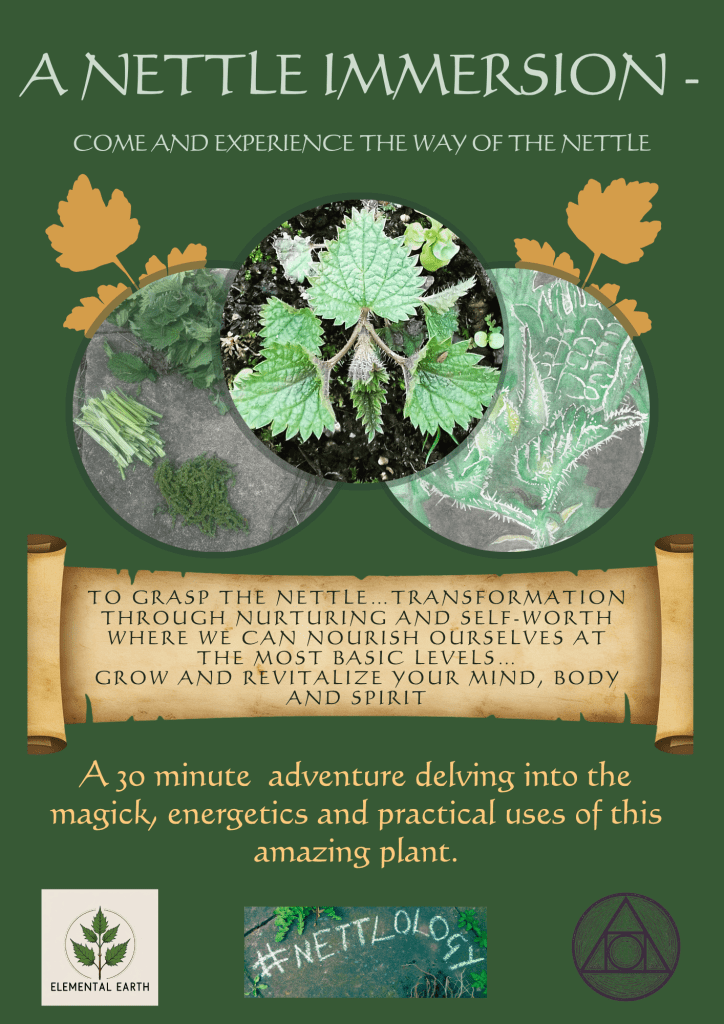
We have since learnt so much from many wonderful people about this amazing abundant natural resource and have held workshops, talks and even a few Nettle-fests along the way! Most recently, we ran a Nettle immersion at The Theatre of small convenience.
In 2020 the poem ‘The Nettle Epoch’ was born the poem is partly a narrative on the world we live in and pays homage to the rich historical folklore and magick surrounding this plant but it also contains a lot of information about the nettle below is the poem in full but over the coming weeks we will be breaking it down to explain the factual meanings behind the metaphors.
So if you would like to join me on a path less travelled…look out for part 1 coming soon.
Just notice, breathe, and connect with the world already around you.
The Gratitude Walk
Take a 15-minute walk. Don’t focus on distance. Simply notice five things you are grateful for in nature: the sound of frost underfoot, the shape of bare branches against the sky, the green of ivy, a bird song, the cold air filling your lungs.
Five Senses Sit-Spot
Find one spot in a park or garden. Sit for 5 minutes. Note one thing you can see, hear, smell, feel, and taste (like the air). This grounds you firmly in the present moment.
Dawn Chorus Moment
One morning, just open a window or step outside for two minutes. Cup your warm drink and just listen to the birds. Let that be your meditation for the day.
SPRING TONICS
The term Spring tonic is a broad reaching term, which has many meanings and can be described in different ways. In basic terms it is a drink of herbal and/or newly emerging early Spring leafy green plants. This can be a simple tea of Dandelion to a more complex tonic wine. It is generally described as a drink which builds up your energy, flushes out your system, and is good for you.
Matthew Wood, in the practice of traditional western medicine, describes It as a herb or food that acts on the body in a slow nutritive fashion to build up the substance of the body. Nettle is a good example of an all round good tonic as it contains many nutrients,vitamins, and minerals including Iron and Sillica.
Matt Wood also goes on to state how tonics can be split into groups in order to identify which would be best suited to an individuals needs – Bitter tonics were used to strengthen and nourish the liver and metabolism (alteratives,for the most part), Sweet tonics acted primarily on the immune system and adrenals (adaptogens).Oily tonics supplied fixed oils and essential fatty acids to tissues to ensure hydration, cell permeability, and to prevent atrophy. Mineral tonics provide essential minerals, and sour tonics are rich in bioflavonoids. Protein tonics are rich in protein.
HISTORY
In days gone by, no foods were imported, so people’s diets were quite limited; the meat people ate either had to be caught fresh or salted for preservation. Vegetables eaten through Winter would generally be root vegetables such as Potatoes, Turnip, Swede and some green leaves such as Cabbage and Kale. They would possibly have some left over grain, stored apples, and Fruit. Come Spring, people would have been malnourished and sluggish. Spring tonics formed an important part of restoring the strength and vitality necessary for the onset of hard work in the fields. People would choose plants growing in abundance locally to themselves. We live in a very different environment today with a completely different food system however today we have major problems concerning the poor quality of food available because of inefficient farming methods, pesticides and insecticides, bad animal practice/meat production and the rise of junk food and ready meals that the consideration of harvesting greens for Spring tonics I would suggest is as of much benefit today as they help to shift toxins in sluggish cells and introduce vitamins andminerals to revitalise.
NATURES SPRING TONICS
Matilda Peters Home Economics dept University of Nebraska–Lincoln
During my research i came across this report from 1926 which was interesting for a number of reasons, Matilda talks about how at that time people would take a Spring medicine treatment of Sulphur, molasses and Sassafras to hon the blood, she mentions how it was prevalent in drug stores a the time to sell such remedies and how it was her own feeling the it was not something we innately need. Indeed today in commercial terms the ‘detox’ is big business, it is inherent for humans to feel sluggish when coming out of Winter and indeed in today’s times i would argue it is more common for people to feel this throughout the year which is in the most part as Matilda quite rightly points out is that an adequate diet makes Spring medicines unnecessary.
Personally, however, I feel this depends on if getting an adequate diet at all times of year is possible, and suggest that Spring tonics are part of this, not separate as they can be made from the abundant plants around us. Interestingly, though during 1926 this may well have been possible as there were many modern farm homes well supplied with dairy, orchards, and gardens, they indeed did not have much difference between their Summer and Winter diets. This was due also to the practice of canning fruits and vegetables and modern transportation facilities. Matilda points out that where dietary practices are followed, there is then an absence of that tired feeling at the end of Winter. She also states that with the coming of warm weather, various greens became available and were eagerly consumed – Wild Onions, Sorrel, Dandelions, and Lambs quarters were promptly added to the food supply. Cows became fresh and milk was available; Hens added worms, insects, and tender grass to their diets, and so began laying eggs. The gardens would begin to provide fresh vegetables, and the first wild fruits of the season would be sought, and thus the tired feeling would disappear around that time. Matilda Peters’ advice is to eat raw and also practice canning and planning for the garden; they had what they called a fruit and vegetable budget, which was a plan for the proper amounts of fruits and vegetables to be grown, canned, and stored for use during the eight non growing months of the year in order to provide for the health of the family. As she also points out, it also avoids over canning one thin to ensure a pleasing variety over Winter! Of course we do have extended growing seasons today and seemingly at that point in history they possible did have less of a need for Spring tonics that previous generations needed and indeed possibly our society today needs today in our foodchain but the points about an adequate diet and for me along with appropriate available supplements from other plants throughout the year is the optimum goal for health and well being.
I like the idea of the fruit and vegetable budget, though, and think its an idea that could be revived and applied for today’s households, particularly in an urban setting looking to be more self-sufficient…..Permaculture your diet!!!!
PLANTS TO USE FOR A SPRING TONIC
There are a number of plants you can use but you must consider each one carefully remembering its effects vary depending on the individual as a general guide you can see below traditional uses for common plants:
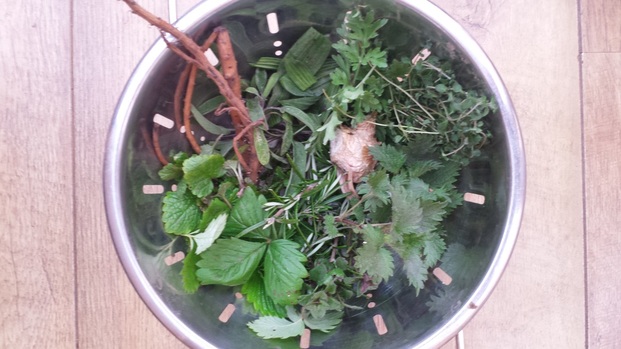
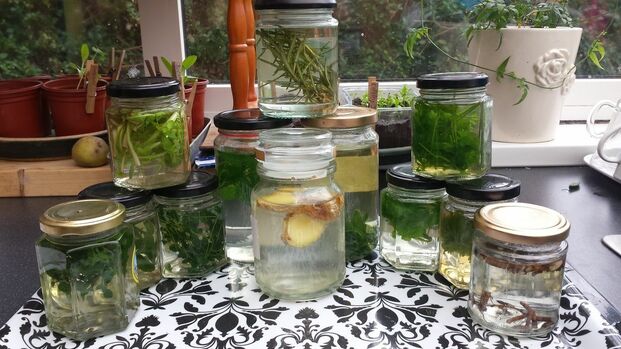
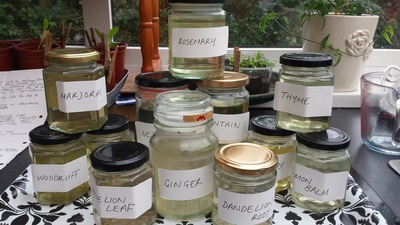
There are many herbs and native plants that are of benefit as a spring tonic, Strawberry leaf was one i have never come across before which is high in vitamin C. I even came across mention of a lady in America whos neighbour had been using Violet leaves as a Spring Tonic. As part of my ongoing plant exploration, I have made up some Spring tonics being mindful of trying to use plants in abundance around me. I have also been having an experiment to make a herbal tonic that will be of particular benefit to myself. So I collected some plants from my garden which according to my research can be beneficial as Tonics- the plants i have been looking at are:
Dandelion leave and root – Diuretic, cholagogue, anti-rheumatic, laxative, Tonic The leaf is light and refreshing ( i used blanched leaves) it didn’t taste bitter and had almost a sweet tinge. The root had a mild earthy flavour not dissimilar to root vegetable cooking water.
Plantain – Expectorant, soothes inflamed and sore membranes, astringent This was rather bland tasting with no smell, it did have a pleasing bright yellow/green colour.
Wormwood – Bitter, tonic, carminative, anthelmintic, anti-inflammatory Wow! Pungent with a capital P! strong tasting and very drying on the mouth and tongue.
Rosemary – Circulatory, nervine stimulant, toning calming effect on digestion, muscular pain Pungent yet floral with a woody note, it felt warming and refreshing. Thyme – Bitter principle, carminative, anti-microbial, anti-spasmodic, expectorant, astringent, anthelminitic It had an earthy woody taste, like a basen flavour yet felt nourishing and refreshing.
Marjoram – Stimulant, expectorant, emmenagogue, rebefacient Also an earthy woody taste that yet refreshes
Nettle – Astringent, diuretic, tonic A green, light earthy taste feels uplifting and nourishing!
Sage – Carminative, spasmolytic, antiseptic, astringent, anti – hidrotic Very aromatic smell another woody one, it has a very plesent flavour not overpowering as i was expecting
Ginger – Stimulant, carminative, rubefacient, diaphoretic Strong, pungent spicy flavour warming on he tongue and stomach
Strawberry leaf – Diuretic, astringent, tonic, anti-bacterial, anti-fungal, anti-oxidant Mild taste, fresh put me in mind of Cleavers
Lemon balm – Carminative, anti-spasmodic, anti- depressive, diaphoretic, hypotensive Strong scent with a very strong lemon taste akin to Citronella.
So i had a mix, a taste and a ponder and this is the one i came up with-
MY SPRING TONIC RECIPE
6 Nettle tops 3 sprigs of Thyme 3 Dandelion leaves 3 Strawberry leaves Small piece of Ginger Infuse in a cup of just boiled water for 10 minutes, strain and enjoy!
On the subject of also including looking at food as a String tonic I came across this recipe from 18th century France Pot herb pie – A Spring Tonic 1 pound of mixed greens(dandelions would be good, as well) 2 eggs 1 pint bechamel (white sauce) nutmeg salt and pepper lemon zest icing sugar and rose water–a sprinkle of each Remove stems from greens. Boil in salted water for 5 minutes. Drain, chop and squeeze dry. Make bechamel by stirring milk into a roux of butter and flour–grate in nutmeg and lemon zest. Simmer until thick. Beat eggs and stir in greens. Add to bechamel. Pour into pie shell of fine pastry. Sprinkle with a dusting of powdered sugar and a drizzle of rose water. Bake in a moderate oven. Remove from oven and allow to set for 10 minutes before slicing to serve.
Recipe adapted from A Taste of History, the Origins of Québec’s Gastronomy. Marc Lafrance & Yvon Desloges, Les Éditions de la Chenelière inc., Québec, 1989, p. 19
Why your garden is a secret weapon for health, nature and freedom
Do you ever look at plastic-wrapped vegetables in the supermarket and wonder about their journey?
Feel a sense of powerlessness when you hear about the food supply chain or the decline of our native wildlife?
In a world full of constant noise and stress, do you crave a simpler, more tangible connection to life?
What if the answer isn’t just in what you buy, but in what you grow?
Your garden no matter what the size holds the key
The four pillars of a productive garden
Pillar 1: For the environment – The garden as an ecosystem
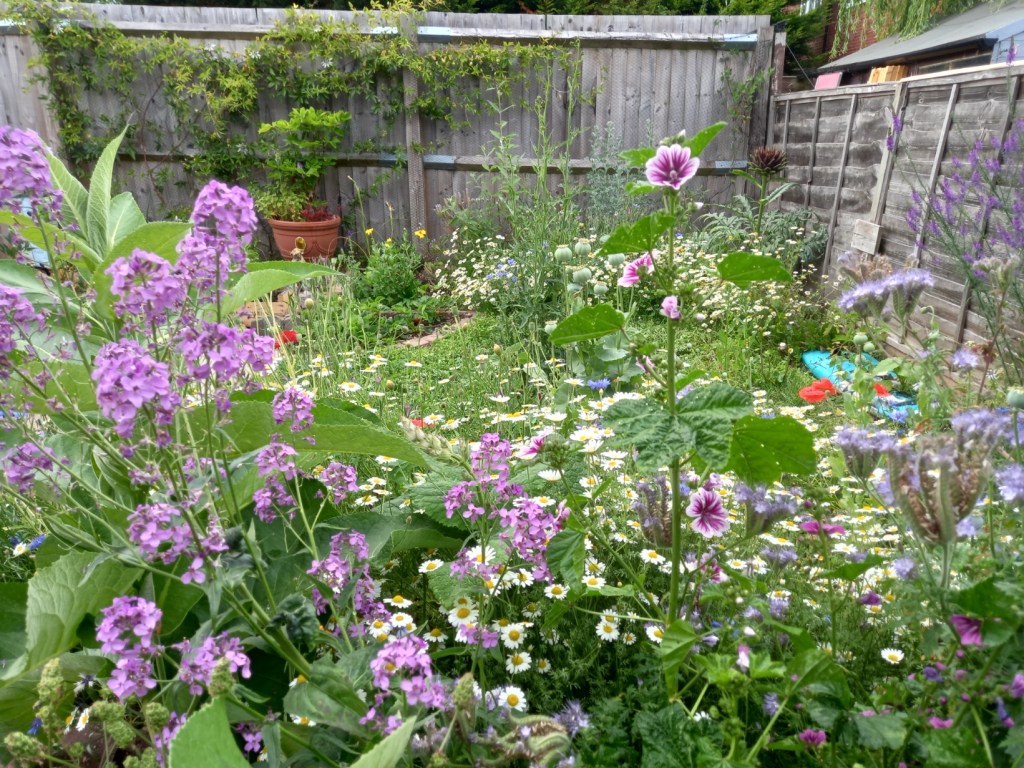
By planting a diversity of species, we create a resilient web of life that supports not only the plants themselves but everything from soil microbes to pollinators to birds. This is the antithesis of the monoculture deserts of industrial farming. A native hedge isn’t just a boundary; it’s a windbreak, a bird habitat and a source of berries. What’s known in permaculture as a stackable function. A productive garden is an active restoration project, we are not just taking from the land but actively healing it. This is the philosophy behind every garden we design at Elemental Earth.
Pillar 2: For Health and Well-being – The garden as a sanctuary
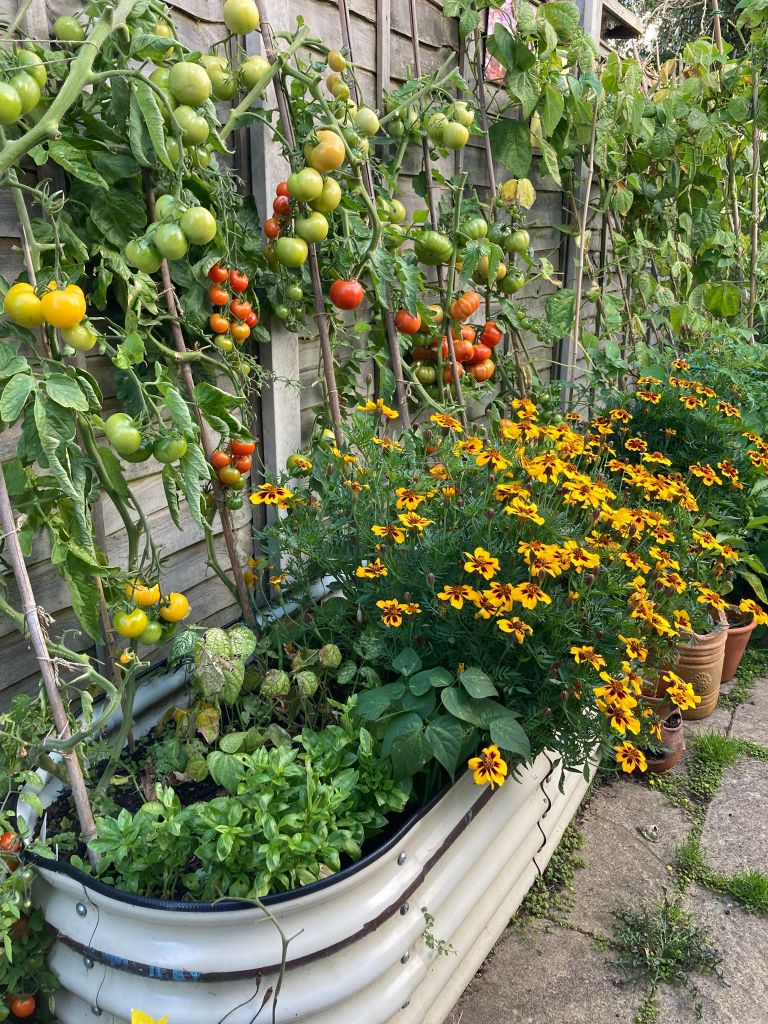
The physical benefits of fresh, hyper-local, nutrient- dense food are remarkable. They are difficult to put into words but must, instead be felt for yourself. The flavour of a homegrown tomato – crisp, juciy, sometimes sweet, sometimes intense. With so many varieties available to grow you are spoilt for choice compared a shipped tomato which is often mushy, tastless, harvested who knows when and sprayed with goodness knows what. Furthermore, the varieties sold can often be very limited too.
For your mental health and well-being; the mindfulness of working with soil, stress reduction of being in a greenspace or just finding a powerful sit spot to re-energise can be very powerful. The garden isn’t just a source of food; it’s a prescription for a more grounded, and healthier way of life.
Pillar 3: The garden as a pantry
You can challenge the fragility of long supply chains and find the empowerment of food sovereignty right at your back door. Just a 3m x 3m bed can provide a significant portion of a family’s fruit, salad and vegetables throughout the growing season. Indeed just encouraging wild plants to grow can open up a new exciting world of foraging and the ability to learn about and make basic herbal remedies. Re-discovering the skill of growing your own food is one of the most empowering and practical things you can do in an uncertain world. It’s a return to personal resilience.
Pillar 4: For seed sovereignty
Seed sovereignty is the right to save, breed and exchange our own seeds. It’s about genetic diversity, cultural heritage, and freedom from the corporate control of our food system and the worry that our wider food systems are systematically falling apart.
Local Action: Weaving in Malvern Green Space
This isn’t just a global idea; it’s a local movement. This is why we are proud to partner with Malvern Green Space, they deliver community meals, a community sharing hub and host community seed and plant swaps. It’s a direct act of community resilience. You’re not just swapping a packet of seed; you’re sharing genetic diversity, local knowledge, and building a network of like-minded growers right here in Malvern. The next swap is on the first Saturday in March 11am till 3pm at Rodway hall, Redland Road, Malvern, WR14 1LY. It’s the perfect, low cost way to start your productive garden journey. We’ll be there- come and say hello!
From Inspiration to action
Feeling inspired but unsure where to start?
The journey from a traditional lawn to a productive paradise can seem daunting, but you don’t have to do it alone.
Feeling overwhelmed?
If you have space but lack the time or know-how, our Edible Backyard starter kit is for you. We come in, build your first raised beds, plant them with a seasonal polyculture, and give you a simple care guide. It’s the perfect kickstart.
For the planners and dreamers
If you’re ready for a full transformation, it starts with a vision. Our Permaculture Garden Blueprint is a comprehensive design service. We analyse your space, your goals, and your lifesyles to create a master plan for a beautiful, resilient, and productive ecosystem tailored just for you.
Feel like you don’t have enough time?
For those who have a garden but struggle to maintain it productively, we offer ongoing garden maintenance based on permaculture or tailored to suit your own personal requirements.
In conclusion, your garden is more than just ornamentation, it is a statement of hope, an act of rebellion, a sanctuary for wildlife, and a source of genuine nourishment. At Elemental Earth we don’t just build gardens; we want to promote permaculture in Worcestershire and help you cultivate a new relationship with the land, your food, and your own well-being.




 welcome